
Planning an autumn trip while visiting Korea? Start with the forecast for your destination, then check what the trees actually look like before you go. Temperature, altitude and tree species affect the timing, so foliage does not peak everywhere at once.
The main dates in this guide come from the Korea Forest Service (KFS) forecast released on September 22, 2026. A forecast date is not an observed peak date or a guarantee of the scenery on your visit. This guide was checked on October 26, 2026; conditions after that date are not updated automatically.
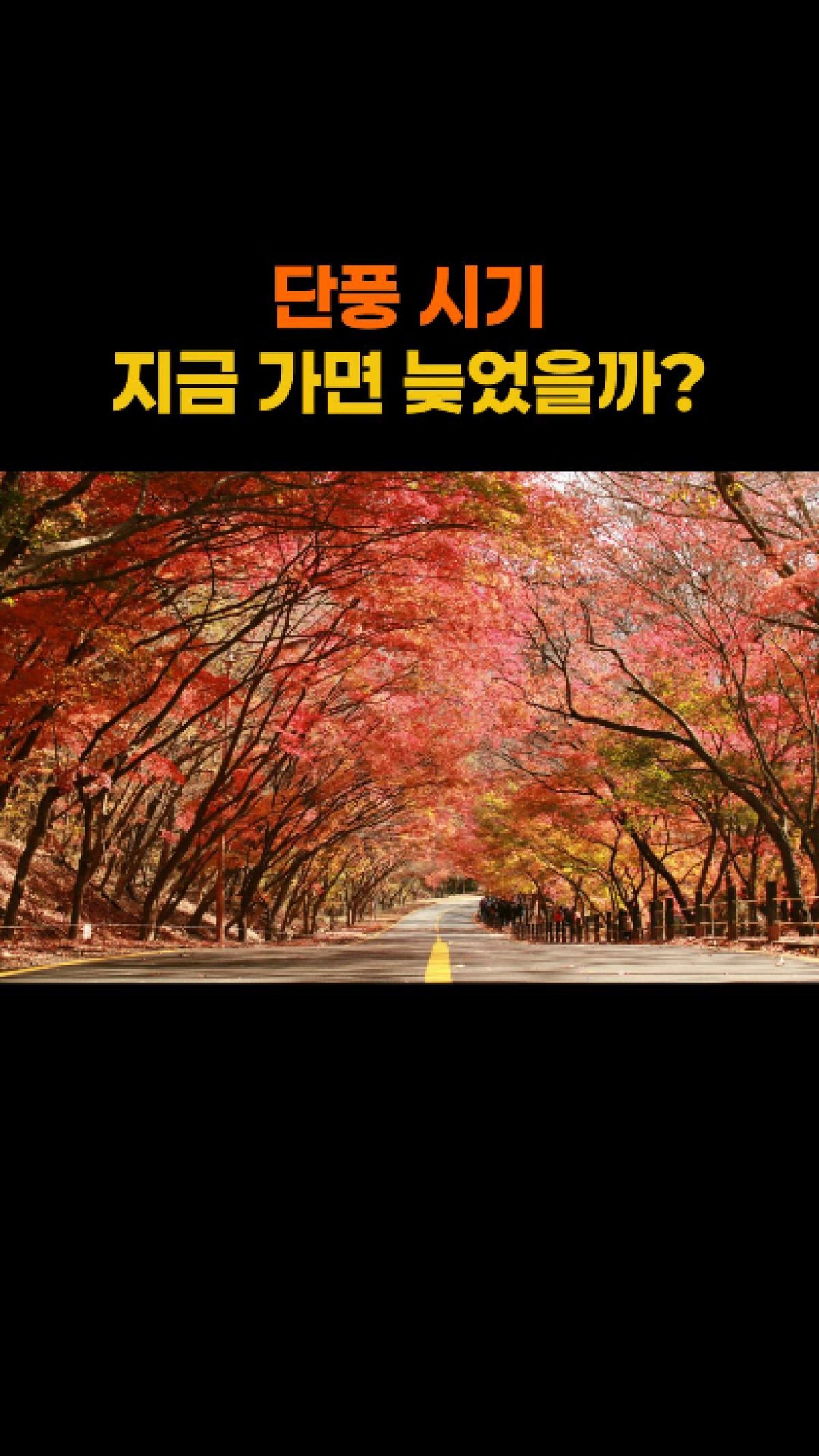
1. Korea's forecast peak foliage dates in 2026
KFS expected the autumn colour season to develop in northern Gangwon mountain areas from early October, with peaks across the country in late October. Its forecast uses a 50% foliage-colour criterion. Read each date together with its tree species and observation location.
The following dates refer to maple foliage forecasts. The Hallasan entry specifically refers to the 1100 Road observation point, rather than every trail or elevation on Hallasan.
| Mountain or observation point | Region | KFS forecast peak date |
|---|---|---|
| Seoraksan (설악산) | Gangwon | October 20 |
| Songnisan (속리산) | Chungcheongbuk-do and Gyeongsangbuk-do | October 28 |
| Palgongsan (팔공산) | Daegu and Gyeongsangbuk-do | October 30 |
| Naejangsan (내장산) | Jeonbuk | November 4 |
| Hallasan, 1100 Road point (한라산 1100도로) | Jeju | November 6 |
Dates may differ by species. Do not apply this table directly to oak or ginkgo trees at the same mountain. Summits, valleys and roadside areas can also look different. The Korean mountain names in brackets can help you identify your destination on local information pages.
KFS September 22 press release: autumn foliage forecast (Korean)
2. Where to consider in the last week of October
As of October 26, 2026, the forecast dates of October 28 for Songnisan and October 30 for Palgongsan may help you shortlist destinations for this week. This does not confirm that either mountain is currently at its observed peak.
Higher areas and lower trails on the same mountain may be at different stages. Check when and where an observation photograph was taken, and whether it represents the part you plan to visit. A forecast falling this week is only one part of the decision.
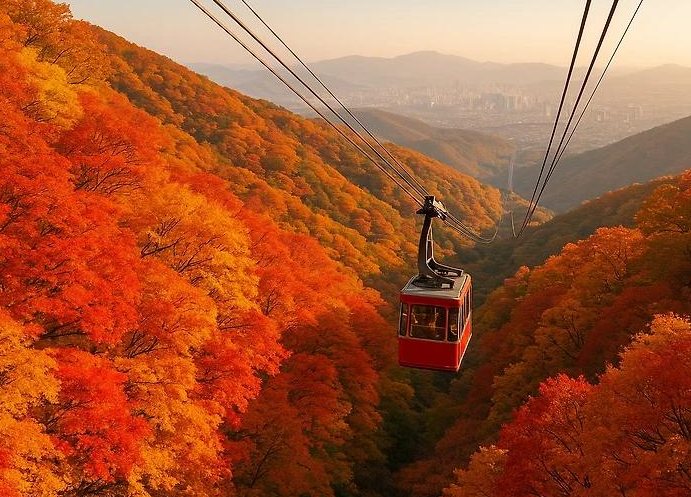
If you plan to use a cable car, check the operator's same-day service and weather notices separately. Do not use this image to identify an operating route or assume that services are running.
3. Where to consider in early November
For the first week of November, the KFS forecasts give November 4 for Naejangsan and November 6 for Hallasan's 1100 Road point. What you see still depends on the species and elevation along your chosen route.
For a Jeju trip, check flights, local weather and access to your intended area as well as the foliage. The forecast for the 1100 Road area is not a forecast for every Hallasan hiking course, and a foliage forecast date does not indicate reservation availability.
4. Ginkgo, maple and oak forecast dates
KFS also published the following nationwide forecasts by tree group.
| Tree group | Nationwide forecast peak date |
|---|---|
| Ginkgo | October 30 |
| Maples | October 31 |
| Oaks | October 31 |
These are not confirmed peak dates for a particular park or tree-lined street. Even if you are looking for yellow ginkgo leaves, check your intended location rather than relying only on the nationwide date.
Why the English forecast map below has different dates
The map below is not the KFS forecast map. Read it alongside the Weatheri forecast featured by the Korea Tourism Organization's VISITKOREA service. The English VISITKOREA article, dated September 8, identifies Weatheri Inc. as the forecast provider.
| Destination | KFS forecast | Weatheri forecast featured by VISITKOREA |
|---|---|---|
| Seoraksan | October 20 | October 25 |
| Naejangsan | November 4 | November 11 |
| Hallasan | November 6 at the 1100 Road point | November 13 for Hallasan |
Do not combine dates from different forecasts into one supposedly confirmed date. Locations, tree species, peak criteria and forecasting methods may differ. Keep forecasts separate from observations, whichever source you use. In particular, the Hallasan entries should not be assumed to cover the same area.
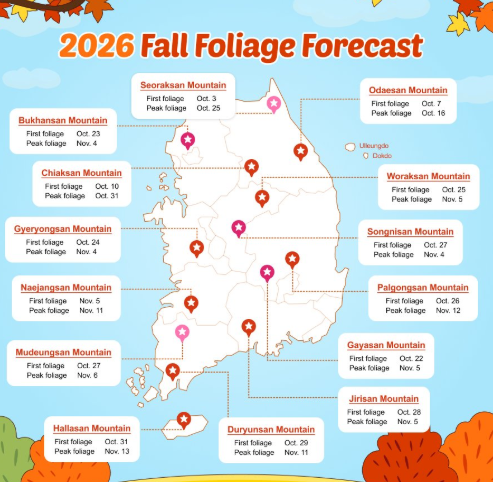
VISITKOREA: 2026 Fall Foliage Forecast, provided by Weatheri Inc. (English)
5. Three things to check before your foliage trip
First: the observation date and exact location
A nearby forecast date does not mean every trail has reached its peak. On the Korea Meteorological Administration (KMA) foliage page, select your destination and check the photo date, observation location and reported stage. This guide does not claim to have confirmed each mountain's actual peak status on October 26.
On the Korean page, look for your mountain's Korean name from the table above. 첫 단풍 means the first autumn colour; 절정 means peak foliage. These labels describe an observation stage, not a promise about the whole mountain on your travel date. Browser translation can help with the page, but keep the original place names and dates available when checking your route.
Second: the weather
Check local forecasts for rain and strong winds before choosing your route and schedule. Prepare clothing for changing temperatures, suitable walking shoes and a way to return to your accommodation.
Third: transport and access notices
Autumn destinations can be busy. Check the relevant operator's notices for parking, public transport, reservations and trail or mountain-entry restrictions. A predicted foliage peak does not mean that a trail is open or that parking is available.
A pre-trip planning sheet
Use this as a personal planning template. Record the date you checked the information separately from the date an observation was made.
| Item to check | What to record for your trip |
|---|---|
| Destination and route | Mountain name, parking area or entrance, and the trail you will actually walk |
| Forecast used | Provider, species or location, release date and predicted peak date |
| Actual observation | Photo date, observation location, and stage such as first colour or peak |
| Access information | Closures and reservation notices, operator, and date checked |
| Transport and weather | Outward and return journeys, local forecast, and an alternative plan |
6. Frequently asked questions
How late can I see autumn foliage in Korea in 2026?
It depends on the region, species, altitude and weather. The KFS table in this guide includes forecasts from late October into early November. It cannot be treated as a nationwide end date for autumn colour.
Is Seoraksan's foliage season already over?
The KFS forecast date of October 20 has passed. That alone does not establish that foliage has finished across the whole mountain. Check recent observations and local notices for the area you plan to visit.
When is Naejangsan expected to peak?
The KFS forecast used here gives November 4. The Weatheri forecast featured by VISITKOREA gives November 11. They are different forecasts; confirming the actual peak requires observations.
Why do forecast providers give different dates?
Observation locations, tree species, peak criteria and methods may differ. Rather than assuming the midpoint between two dates is the answer, look for actual observations at your intended destination.
7. Which region would you like to explore?
We plan to add regional guides so readers can continue with a destination-specific article. The four guides below have not been published, so they are not clickable links. We will connect them after publication.
| Planned regional guide | Status |
|---|---|
| Seoraksan foliage and trail information | Planned; link to follow after publication |
| Palgongsan foliage and nearby attractions | Planned; link to follow after publication |
| Naejangsan foliage and visit preparation | Planned; link to follow after publication |
| Autumn foliage near Seoul | Planned; link to follow after publication |
8. Official sources and travel information
Planning your visit
The KFS forecast shows why the best time for autumn colour varies by destination and tree species. Choose a possible date using a forecast, then check dated photographs and access notices before setting off.
ROAD-PEAK distinguishes sourced information from illustrative images. This article is not a first-hand trip report or a live, automatically updated foliage tracker.
Sources and review date
- Korea Forest Service September 22, 2026 foliage forecast: government press release (Korean)
- KFS forecast map publication notice: Sotong24 (Korean)
- Korea Tourism Organization VISITKOREA: Weatheri forecast, September 8 (English)
- KMA mountain foliage observations (Korean)
Last reviewed: October 26, 2026. This is the English edition of the Korean guide, with the same forecast tables, images and planned regional choices. Korean place names and observation terms have been added to help visitors navigate local sources. Photographs are not presented as observations of today's conditions.